
10 September 2024
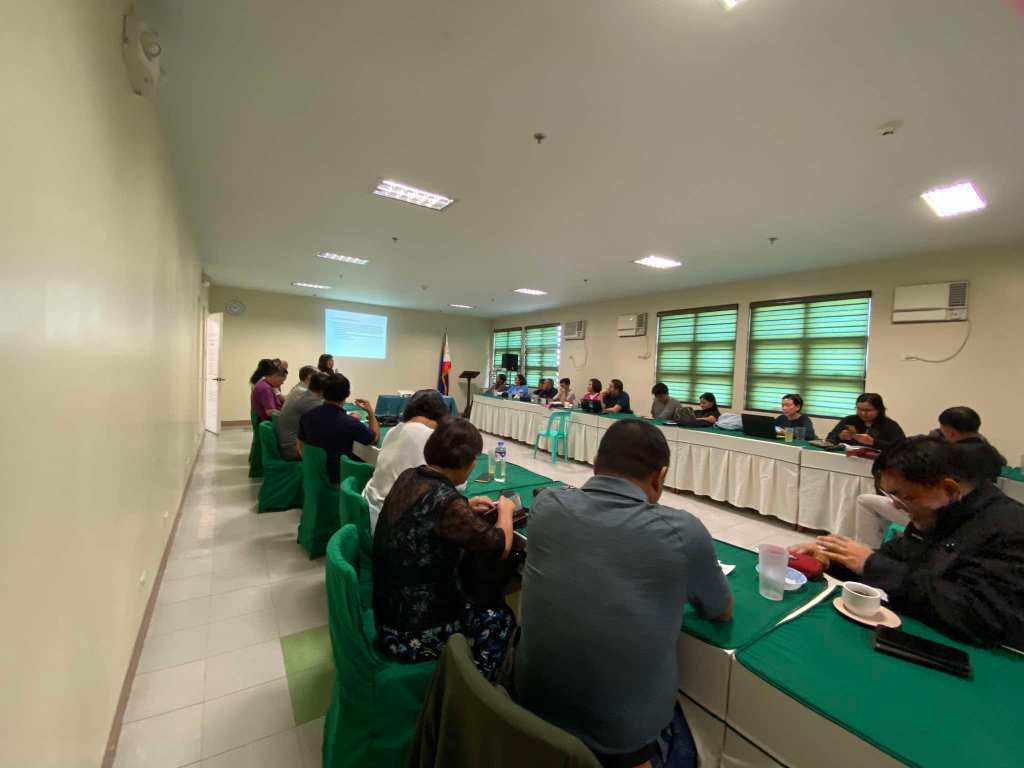
We express our warmest welcome to all the members of our National Commissions, both those who are present here and also to those who, for some reasons, cannot be with us today. This is the first meeting of the Commissions following our 12th Provincial Synod held last May which signified the change in membership of these Commissions whose members will serve until the next Synod in 2027. As you can see in the canonical functions of your respective Commissions, you are the “think tanks” or study groups of this Church. You are to study and generate ideas and proposals as we move forward in this triennium and even beyond. Your outputs will serve as recommendations to the Executive Council which is our decision-making body in between our Provincial Synods. We therefore invite the chairpersons of the various Commissions to attend meetings of Executive Council with seat and voice but without vote and from time to time, Council may refer certain issues to you further study.
With a new triennium comes a fresh energy. With new Commission memberships come fresh insights. We therefore look forward to a dynamic and exciting work from you in this triennium.
Last Sunday, a list of names of persons was given to our National Cathedral asking for prayers as they take the first day of the bar examinations accordingly the most difficult professional examination in the country. Those in the list were graduates of law schools in Baguio City and most of them are not Episcopalians. The structure of the examinations has been changed but there was a time when it took 4 Sundays in one testing center in Manila and so examinees have to come down to the metropolis and rent a place for a month. The Cathedral Heights compound has been a favorite among examinees from the north not only because of its lodging places but also because of the spiritual support that the Cathedral and SATS chapel provide. Examinees would attend the 6:30 mass at SATS chapel almost every day. It is notable that the passing percentage of those who stayed here for the exams was often higher than the national passing rate. And so even up to now that the examination only takes three days within a week and with 13 testing centers all over the country, examinees, even if they do not lodge in the compound, still send their names for prayers at our Cathedral.
It should be a testament to the reverence that is accorded to our Church if people, including those from other denominations, seek our prayers and spiritual support. This should get us out of the box which, for so long a time, has confined us to the institutional behavior that we are a church for our members and it is difficult to imagine people of other denominations and even of other faiths and non-faith joining our fellowship unless they are either baptized or received. In our canonical classification of membership, we now have a distinct class of worshippers who may not be received in our church but are actively attending our congregations and this should be opened up to the broadest possible participation.
At the height of our vegetable rescue operation in January this year, a staffer of GMA TV station who did a story on our work said that her Christian faith was affirmed and strengthened by what we were doing at that time.
These instances instruct us to be a Church that is intentionally providing faith affirmations to the world. Our understanding of evangelism must include going beyond our traditional course of establishing congregations to becoming a Church which transforms and brings to Christ even those who are not our members.
Of course, in this regard, we need to offer something new. As somebody said, even the best preacher louds peaking in front of Cathedral Heights along E. Rodriquez Sr. Avenue may not have an impact to the GMA staffer who is presumably a devoted Catholic. Our work of rescuing vegetable farmers however made a profound impact on her that she may not have experienced in her previous faith journeys.
Which brings us to the call of the Anglican Consultative Council for Anglicans worldwide to continually seek a transformative culture change where we, living Jesus-shaped lives, should have a positive impact on our communities, homes and workplaces. As we begin another triennium, we are challenging our national commissions to participate in leading this Church to become more intentional about creating an impact in the world we are in at this day and age. Again, let me remind everyone that the Philippines is the only Christian country in Asia and yet Page 3 it has the highest level of inequality in the region with a Gini ratio of 42.3whichmeans that the Christian values of compassion, mercy and sharing do not really impact on the lives of its people. Also, despite the Christian faith prevalent in the country, it ranks very high at 115 in the 2023 corruption perception index, much higher than 83 which is the rank of Vietnam, an atheist state. Vietnam also has a lower social inequality rate at 36.8.
The ACC is therefore right on point when it challenges Anglican churches to make a positive impact on our communities, homes and workplaces so that in its words, “there must be in every locality a living centre of Christian faith, Witness and fellowship.”
Every organization is known by the stories that it tells of itself. In the current world of social media, every organization is known by the stories that it posts on its Facebook accounts. While I am not active in Facebook, I hear what people say and what people post. And based on these, somebody has asked me if the ECP is becoming a mere ceremonial church. What does this mean? I understand that the bulk of Facebook posts about the ECP are those of ordinations, liturgical celebrations, birthday or marital celebrations and the like. I also understand that these are the posts that generate the highest engagements from our members.
In December 2023, an active Filipino Episcopalian etched an enduring legacy in the hearts of thousands of people. Dr. Brigette Y. Galong, then the Principal of Bakakeng Elementary School and a parishioner and generous giver at Holy Innocents Episcopal Church in Baguio City, fearlessly sacrificed her safety to save a drowning pupil during their school’s excursion in Bauang, La Union. After bringing the child to safety and physically exhausted from the effort, the waves caught up with her and washed her into the deep, resulting in her untimely demise. The Resolution of the City Council of Baguio City which honored her stated and I quote:“ Galong not only fulfilled her administrative duties with distinction but also earned respect as an esteemed educator. Her influence reached far beyond the realms of traditional academic boundaries, as she imparted invaluable skills and values that became fundamental to the personal growth and development of the young minds she nurtured.” The Council Resolution underscored “her extraordinary bravery and compassion, emphasizing how these qualities mirrored the values she tirelessly instilled within the school community during her tenure. ”But while her heroism was posted in various government and media pages which honored her, she was not even featured in any ECP Facebook page, not even int he page of her own parish. Not many people therefore knew that she was an Episcopalian and a graduate of St. James High School of Besao, Mountain Province and the values that she lived by may have been instilled on her by her church and school.
I am sure that there are other Filipino Episcopalians whose faith have led them to become shining beacons in their respective communities. Unfortunately, their stories may not and may never be known to many of us because we have chosen to tell stories of ceremonial activities rather than modelling the day today lives of people who are living out our Five Marks of Mission and who can be powerful inspiration and model for others. I am emphasizing this point because in the complexities of what we see around us today, it is becoming more and more difficult to express our faith in the realities of our times. The temptation to confine our faith to the external trappings of our rituals and ceremonies as well as to the innermost recesses of our individual beings is huge not only because this is the easiest thing to do but it is also what attracts Facebook likes and comments. In the few instances when our ECP.Official posted stories of our ministries, you will find very few engagements from among our people and often you will not see those who would almost automatically react to a posting of clergy eating or doing things inconsequential to mission and ministry.
During the recent Paris Olympics, we were jubilant that finally we had a gymnast who bagged two golds while two others won bronze medals. But there was another Filipino also recognized worldwide as an awardee by the World Olympians Association. From among tens of thousands of participants in the Olympics for several decades, five sports legends were conferred the esteemed Olympian for Life (OLY) award and one of them is our very own Gilian Akiko Thomson-Guevarra, a 3-time Olympian for swimming and winner of 8 golds in the Southeast Asian games. Why was she awarded the prestigious OLY? Take note that, unlike the four others, Akiko never won an Olympic medal but she was globally acclaimed because she has used her Olympic stature, influence and energy, time and commitment to bring sports to disadvantaged children of this country. Partnering with Childhope Sports Clinics, she has and is running sports events and clinics among street children for several years now, not only providing fun times for the less fortunate kids who otherwise would be deprived of the joys of sports but also offering hope to them to rise above their current predicament. Akiko was the daughter of the late Marsh Thomson, a very active member of the ECP and her family used to attend Holy Trinity Parish.
This inspirational story was posted in our Facebook page, ECP.Official, which garnered more than 600 likes but you go over the names of those who have positively reacted to the post and perhaps around 98% are perhaps not members of our church.
So from becoming more intentional about creating an impact, we must also be intentional about letting the world know the impact that we are creating so that we can provide faith affirmation at the same time provide a way of navigating the complexities of our times.
The Provincial Secretary will be presenting current mission prospects and challenges as we bring our work to the next level. But let me talk about one such challenge. Among Anglican provinces in Asia, you will see that Nippon Sei KoKai has its own Japanese prayer book and the Hongkong Sheng Kung Hei has its own Chinese prayer book. So, does the Churches in South Korea and even in Myanmar while the Malaysian dioceses use a BCP in Selako language. Except for NSKK, we became an Anglican province much earlier than these churches. Yet, up to now, we do not have a prayer book in our own language. I will be the first to admit that my tongue twists at every utterance of a Tagalog word. But in our work at the Visayas Missionary Diocese and in our engagement with our Concordat church, I have come to appreciate the beauty of a Tagalog worship service and I have preached in a number of occasions in Tagalog. I guess it only takes a little adjustment in perspective and we can become appreciative of our very own language which embodies our unique thought forms and aspirations.
We acknowledge the work of our Diocese of Central Philippines in coming up with a Holy Mass in Tagalog that is now on trial use in the diocese. This is the foundational liturgical form and so I think that 80% of the work for the drafting of a Tagalog BCP has already been done. I understand that EDCP continues to work on Baptism, Holy Matrimony, funeral and even ordination services in Tagalog. I now encourage our Commission on Liturgics and Christian Education to work with EDCP and evolve a Tagalog Book of Common Prayer that we shall present at the next Synod for trial use. We should look at the Synod then of 2030 for the final approval of a Tagalog BCP.
Also, let us take a definitive intention to come up with two other BCPs that can be used in the regions: an Ilocano BCP and a Tiruray BCP. I understand that this will open up a lot of discussions on what is the appropriate language to be used. Especially in Mindanao, questions on whether Tiruray, Visaya or Cebuano or other languages are the more dominant. In the north, people will say there are variations in the Ilocano language of Santiago, Ilocos region, etc. These are the same questions that actually prevented us from completing one. So, let us endeavor to produce a common Ilocano and Visaya BCPs and let these be improved as we move on.
Sa aking pagtatapos, akin pong pinagdadasal na “Nawa’y ipagkaloob ng ating Ama sa inyo ang lahat ng kailangan ninyo upang maisagawa ang kanyang kalooban, at sa pamamagitan ni Jesu-Cristo ay gawin niya sa atin ang nakalulugod sa kanya. Papurihan nawa si Cristo magpakailanman!” Amen.
+Brent Harry Alawas
 The Episcopal Church in the Philippines