
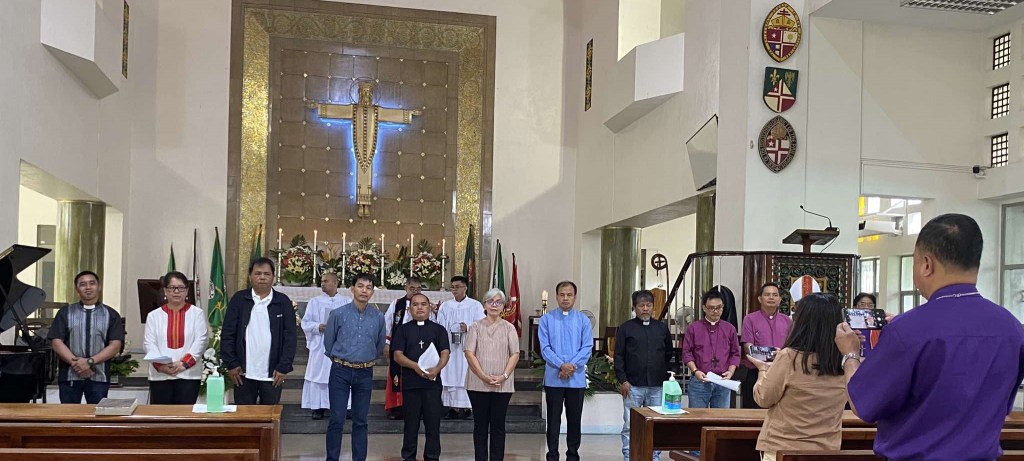
(Photo: Commissioning of new Executive Council Members)
Grace and peace to you from God our Father and from our Lord Jesus Christ! Let me express our warmest welcome to all the members of Executive Council and to our people who are graciously joining us in this Eucharistic celebration to open the 12th Executive Council. This is the first meeting of Executive Council constituted according to our recently amended Constitution which provides that it shall consist of the Prime Bishop, 4 diocesan bishops chosen by the Council of Bishops, and 5 lay persons and 5 clergy elected by the Provincial Synod. If you recall the discussions in Synod, this constitutional amendment is in line with the Philippine Corporation Code’s requirement that boards of trustees of religious corporations shall have a maximum membership of 15 persons. With the increase in the number of our dioceses and jurisdictions, the previous constitutional composition of Executive Council which was the Prime Bishop and all diocesan bishops and one representative from each diocese is no longer feasible.
Take note that the 15 members are the voting members of our Council and the Board of Trustees of this Church. We also have ex-officio members who have seat and voice but without vote in this body. Our practice however is that, except in major contentious issues where the division of the house is necessary and where only the 15 voting members are required to vote, we will call for voting on every motion or action by viva voce or by ayes and nays and we encourage everybody, regardless of whether you are a voting or non-voting member to express your mind on any matter before the Council. It shall be the prerogative of the Chair to decide whether a matter needs to be voted upon only by the voting members and this happens, to reiterate, in cases of major contentious issues.
Part of our worship this morning is the commissioning of the 15 Executive Council members. This is the first time we are doing this commissioning exercise which is intended to formally activate the gifts of our members to be fully utilized for service to God and to the Church through this governing body. You know, at St. Luke’s Medical Center, the feast of St. Luke is celebrated by this institution in October of every year and part of this celebration is the commissioning of the members of its board of trustees. In this SLMC commissioning service which is usually celebrated by the Prime Bishop, all the trustees, regardless of religious affiliation participate in the Eucharist and are specifically assigned to bring the bread and wine and the gifts and offerings to the altar. So, we take it from the practice of our institution to do the same by commissioning our Executive Council members at its first meeting following its constitution by the Provincial Synod.
Today is the feast of St. Joachim and St. Anne, the parents of Mary and the earthly grandparents of our Lord Jesus Christ. As the information on them comes from apocryphal literature, little is known about them. They are not mentioned in the Bible and our Gospel lesson for this feast day is the Annunciation of Mary in Luke 1:26-38. But there is wide understanding and common agreement in the early Church that Joachim and Anne must have been faithful and devoted parents who cultivated in the young Mary a love for God and prepared her for her role in the story of divine redemption. Pope Francis says the following words on Saints Joachim and Anne:
𝘐𝘯 𝘵𝘩𝘦𝘪𝘳 𝘩𝘰𝘮𝘦, 𝘔𝘢𝘳𝘺 𝘤𝘢𝘮𝘦 𝘪𝘯𝘵𝘰 𝘵𝘩𝘦 𝘸𝘰𝘳𝘭𝘥, 𝘢𝘤𝘤𝘰𝘮𝘱𝘢𝘯𝘪𝘦𝘥 𝘣𝘺 𝘵𝘩𝘦 𝘦𝘹𝘵𝘳𝘢𝘰𝘳𝘥𝘪𝘯𝘢𝘳𝘺 𝘮𝘺𝘴𝘵𝘦𝘳𝘺 𝘰𝘧 𝘵𝘩𝘦 𝘐𝘮𝘮𝘢𝘤𝘶𝘭𝘢𝘵𝘦 𝘊𝘰𝘯𝘤𝘦𝘱𝘵𝘪𝘰𝘯. 𝘔𝘢𝘳𝘺 𝘨𝘳𝘦𝘸 𝘶𝘱 𝘪𝘯 𝘵𝘩𝘦 𝘩𝘰𝘮𝘦 𝘰𝘧 𝘑𝘰𝘢𝘤𝘩𝘪𝘮 𝘢𝘯𝘥 𝘈𝘯𝘯𝘦; 𝘴𝘩𝘦 𝘸𝘢𝘴 𝘴𝘶𝘳𝘳𝘰𝘶𝘯𝘥𝘦𝘥 𝘣𝘺 𝘵𝘩𝘦𝘪𝘳 𝘭𝘰𝘷𝘦 𝘢𝘯𝘥 𝘧𝘢𝘪𝘵𝘩: 𝘪𝘯 𝘵𝘩𝘦𝘪𝘳 𝘩𝘰𝘮𝘦 𝘴𝘩𝘦 𝘭𝘦𝘢𝘳𝘯𝘦𝘥 𝘵𝘰 𝘭𝘪𝘴𝘵𝘦𝘯 𝘵𝘰 𝘵𝘩𝘦 𝘓𝘰𝘳𝘥 𝘢𝘯𝘥 𝘵𝘰 𝘧𝘰𝘭𝘭𝘰𝘸 𝘩𝘪𝘴 𝘸𝘪𝘭𝘭. 𝘚𝘢𝘪𝘯𝘵𝘴 𝘑𝘰𝘢𝘤𝘩𝘪𝘮 𝘢𝘯𝘥 𝘈𝘯𝘯𝘦 𝘸𝘦𝘳𝘦 𝘱𝘢𝘳𝘵 𝘰𝘧 𝘢 𝘭𝘰𝘯𝘨 𝘤𝘩𝘢𝘪𝘯 𝘰𝘧 𝘱𝘦𝘰𝘱𝘭𝘦 𝘸𝘩𝘰 𝘩𝘢𝘥 𝘵𝘳𝘢𝘯𝘴𝘮𝘪𝘵𝘵𝘦𝘥 𝘵𝘩𝘦𝘪𝘳 𝘧𝘢𝘪𝘵𝘩 𝘢𝘯𝘥 𝘭𝘰𝘷𝘦 𝘧𝘰𝘳 𝘎𝘰𝘥, 𝘦𝘹𝘱𝘳𝘦𝘴𝘴𝘦𝘥 𝘪𝘯 𝘵𝘩𝘦 𝘸𝘢𝘳𝘮𝘵𝘩 𝘢𝘯𝘥 𝘭𝘰𝘷𝘦 𝘰𝘧 𝘧𝘢𝘮𝘪𝘭𝘺 𝘭𝘪𝘧𝘦, 𝘥𝘰𝘸𝘯 𝘵𝘰 𝘔𝘢𝘳𝘺, 𝘸𝘩𝘰 𝘳𝘦𝘤𝘦𝘪𝘷𝘦𝘥 𝘵𝘩𝘦 𝘚𝘰𝘯 𝘰𝘧 𝘎𝘰𝘥 𝘪𝘯 𝘩𝘦𝘳 𝘸𝘰𝘮𝘣 𝘢𝘯𝘥 𝘸𝘩𝘰 𝘨𝘢𝘷𝘦 𝘩𝘪𝘮 𝘵𝘰 𝘵𝘩𝘦 𝘸𝘰𝘳𝘭𝘥, 𝘵𝘰 𝘶𝘴. 𝘏𝘰𝘸 𝘱𝘳𝘦𝘤𝘪𝘰𝘶𝘴 𝘪𝘴 𝘵𝘩𝘦 𝘧𝘢𝘮𝘪𝘭𝘺 𝘢𝘴 𝘵𝘩𝘦 𝘱𝘳𝘪𝘷𝘪𝘭𝘦𝘨𝘦𝘥 𝘱𝘭𝘢𝘤𝘦 𝘧𝘰𝘳 𝘵𝘳𝘢𝘯𝘴𝘮𝘪𝘵𝘵𝘪𝘯𝘨 𝘵𝘩𝘦 𝘧𝘢𝘪𝘵𝘩!
There is a church named the Church of St. Anne in Jerusalem built near the pool of Bethesda, one of the Christian churches located in what is referred to as the Muslim Quarter of Jerusalem. You will recall that it was in this pool where Jesus healed a sick man on a Sabbath. In John 5:1-9, it is narrated that this pool was where a multitude of sick people gather because at a certain time an angel went down and made the waters move and when this happens, the sick would go down to the pool to be healed. Jesus found near this pool a sick man and he asked him, “Do you want to be healed?” The latter replied, “Sir, I have no one to help me go down to the pool.” Jesus said to him, “Rise, take up your bed and walk.” And immediately the man was made well. This man has been sick for 38 years and in all those years, he was never able to go down to the pool to be healed because no one helped him do so. Imagine, for 38 years nobody has helped this man. The healing was followed by the religious leaders’ condemnation of Jesus’ action done on a Sabbath but Jesus took this as an occasion to denounce the use of the Sabbath as an excuse for not helping others. For all those 38 years, every person who had been in that pool must have cited countless reasons why they would not help a sick man.
Contrast this story to our Gospel lesson last Sunday, Mark 6:5356. Jesus and his disciples arrived in Gennesareth and when people recognized him, they went all over the countryside, looking for the sick and bringing him to Jesus to be healed. Unlike the sick man beside the pool in Bethesda who laid down for 38 years with no one helping him, the people in our Gospel account last Sunday must have gone to the far reaches of every village and town looking for the sick whom they then carried on their shoulders and may have walked for days and nights if only to bring the ill to Jesus and to beg him to allow them to touch even the tassel of his robe. By doing so, all who touched his robe were restored to health.
Taking inspiration from the acts of those people in the Gospel passage, it is now the task of every member of this Executive Council to go to the far reaches of our dioceses, congregations and communities and listen to our peoples’ stories, concerns and aspirations and bring these to our Council where we shall collectively offer them to God. It is the task of everyone to go around the countryside looking for situations that continue to bring illness and destruction to this world and let us bring these in prayer and action before God that healing may also be restored in such situations.
Indeed, it is the task of this Council to discern what God is saying to us and commanding us to do and we can only make a full discernment if everyone in this Church has a voice in the process. As each of us represents a constituency, let us bring the voices from our constituencies to our conference hall where we can deliberate on them and collectively pray for God’s healing and guidance on everyone, on every community and on the whole world.
For despite the bleak, ecological, economic and social landscape we see around us, in God and with God we are looking at a very bright future.
As I repeatedly cited and as SATS has reported to us, its enrollment last school-year breached the 100 student population mark, the first time this happened since 1993. The President and Dean will report to us later the actual figures we are expecting this incoming school-year but I understand that 61 persons have passed the admission exams. Even if only one half of this will actually enroll, that will be 30 incoming freshmen which is about the same for last year. This is truly exciting as we see renewed and enthusiastic interest in the ministry.
The substantial increase in the number of prospective ministers that we expect in the coming years must prompt us to think outside the box. What new ministries can we do with our increased workers in the vineyard? For one thing, we must seriously look at the opportunities offered by no less than the Constitution of this country, which, according to the Provincial Secretary, may be the only constitution in the whole world and among secular countries which specifically provides for the protection and promotion of the spiritual well-being of young people. In western countries, any mention of spiritual matters in their state law would immediately be opposed as a violation of the separation of the church and the state. Yet, Article II, Section 13 of the Philippine Constitution provides that the state recognizes the vital role of the youth in nation-building and shall promote and protect not only their physical, moral, intellectual and social but also their spiritual well-being. In the implementation of this provision, the Department of Education has repeatedly issued guidelines encouraging and promoting the teaching of religion to children in public elementary and secondary schools within the regular class hours. We congratulate our clergy who have taken personal initiatives to actually respond to this but the ECP has not taken an institutional effort to participate in the teaching of religious classes which, as the DEP-ED guidelines has stated, is vital in the molding of the youth. In preparation for our participation in this effort, SATS and Trinity University of Asia have agreed to provide education classes to our BTH students in order to prepare them for professional teaching roles. SATS is also looking at tracks that its students may pursue to further enhance their respective competencies.
But even as we are excited by the prospective increase in clergy, we are cognizant of its financial requirements. As previously noted, we will be requiring an additional Php 9.3 million, Php 17.9 million and Php 25.1 million for the years 2026, 2027 and 2028, respectively. These are huge amounts that require fresh funds and we have a little less than 2 years to work out possible sources.
In today’s meeting, we will be confirming the new members of our national commissions. All of them have very exciting challenges and potentials to deliberate upon and for the Commission on Finance and Stewardship, sourcing the additional fund requirements to support our growing number of clergy will be top priority.
As you know, your Prime Bishop was invited to attend the Synod of the Church of England in February of this year. When I arrived there, I asked the staff assigned to look into my presence there, who else from other provinces were invited to the Synod and their reply was, “you are the only invitee”. I felt uneasy about this as it would mean the spotlight will be focused on me but Bishop Anthony Poggo, the General Secretary of the Anglican Communion, calmed my nerves when he explained that their office monitors and is in touch with all the provinces in the Anglican Communion and that they know what is happening in each of them. He said that they see and they like what is happening in the ECP. That was a greatly pleasing assurance and a commendation of the great work that everyone in this Church is doing.
I guess that part of the recognition of the ECP’s contribution is the invitation of our people to the membership of various bodies in the Anglican Communion. There are more than 40 provinces in the Communion and not all of them are represented in its commissions and networks. For us in the ECP, we are blessed that aside from our already existing representation in the Anglican Liturgical and Theological Commissions, we were also asked to send representatives to the newly formed Science Commission, the Anglican Schools Network, Health Network and the Safe Church Commission. Bishop Hilary Pasikan, Jr. will represent us in the Science Commission which will meet in Virginia Theological School in October while Dr. Gertrude Dominguez will be attending the meeting of the Health Network in Hongkong in October. Ms. Sunshine Dulnuan will represent us in the Safe Church Commission meeting in Zimbabwe in September. Dr. Cleofe Kollin is our representative to the Schools Network which will be holding online events for certain themes for discussion, idea sharing and resourcing: chaplaincy on September 24 and mission and education on November 26.
Also in today’s meeting, we will be electing the replacement for The Rev. Joan Laus-Beleo, our clergy representative to the Anglican Consultative Council. As she has migrated to Canada, she needs to be replaced by another clergy to serve her unfinished term.
Then on October 10-15, the Council of the Church in East Asia or CCEA will be holding its General Assembly here in the country. This is expected to be participated in by 150 bishops and spouses, one clergy and one lay representatives from each diocese in the Anglican provinces in East Asia plus the bishops and spouses and representatives from the national churches of Australia and Japan. We also expect several resource persons and guests from the Anglican Communion office, the United Society Promoting the Gospel, The Episcopal Church and the Anglican Alliance. Aside from the usual fellowships, bible studies and sharing of reports and in order that CCEA can work along a specific course of action, we are planning to get the Assembly to commit its members to a particular action on creation care. This will be the targeting and attainment by each church of Net Zero in its carbon emissions as our contribution to addressing global warming and climate change. The ECP will present its plan on this to show to the assembly that a net zero target is doable.
The preacher in yesterday’s ordination and consecration service was Archbishop Don Tamihere, currently the Bishop of the Maori Church and one of the three Primates of the Anglican Church of Aotearoa New Zealand and Polynesia. He is here with three other colleagues, Venerable Dr. Hirini Kaa, Principal of St. John’s Theological College; Rev. Michael Tamihere, Archdeacon for Theological Education; and Mr. Simon Heath, lay leader and education and management consultant. Being Maori who are the indigenous persons in Aotearoa New Zealand just like us Igorots and Tedurays and other indigenous communities in the Philippines, we have a common indigenous heritage and aspiration and therefore it is desirable that we continue to be in dialogue with each other as we bring in our rich indigenous spirituality into our faith expressions as Anglican Christians. We look forward to a fruitful partnership with them. Last night, we were invited to a dinner hosted by Her Excellency Dr. Catherine McIntosh, the New Zealand Ambassador to the Philippines, who is herself an Anglican and married to an Anglican priest, Rev. Paul McIntosh. While here in the Philippines, the ambassador and the Rev. McIntosh, together with their 2 children, attend worship services at Holy Trinity Church in Makati.
Finally, let me inform this Council that the bishops have set the installation of the Prime-Bishop Elect on March 12, 2025. We pray for God’s guidance as we go into a smooth and fruitful leadership transition. Amen!
+ BRENT H.W. ALAWAS
26 July, 2024, Quezon City, Philippines
 The Episcopal Church in the Philippines